
Energy Storage Blog

Subscribe to our Newsletter for Article, Industry, and Company Updates

This site is protected by reCAPTCHA and the Google Privacy Policy and Terms of Service apply.

EticaAG BESS for hospitals installed outside a healthcare facility
Industries

BESS for Hospitals: Lower Costs, Stronger Resilience, and Fire-Safe Energy Storage

Hospitals need energy storage that does more than lower utility bills. BESS can reduce demand charges, support resilience, improve onsite solar economics, strengthen microgrid performance, and give facilities teams more control over campus energy use. For healthcare environments, those benefits only work when the system also meets a higher standard for fire-safe deployment.

K3-class fluid fire safety graphic showing blue immersion cooling fluid and fire safety messaging for battery energy storage systems.
Safety

K3-Class Fluids Change the Fire Safety Equation in Battery Energy Storage

K3-class dielectric fluids carry the highest fire-safety classification under IEC 61100, with a minimum fire point of 300°C. In battery energy storage systems, these high fire-point fluids support safer immersion cooling by resisting sustained combustion, reducing propagation risk, and improving the safety case for permitting, insurance, and deployment.

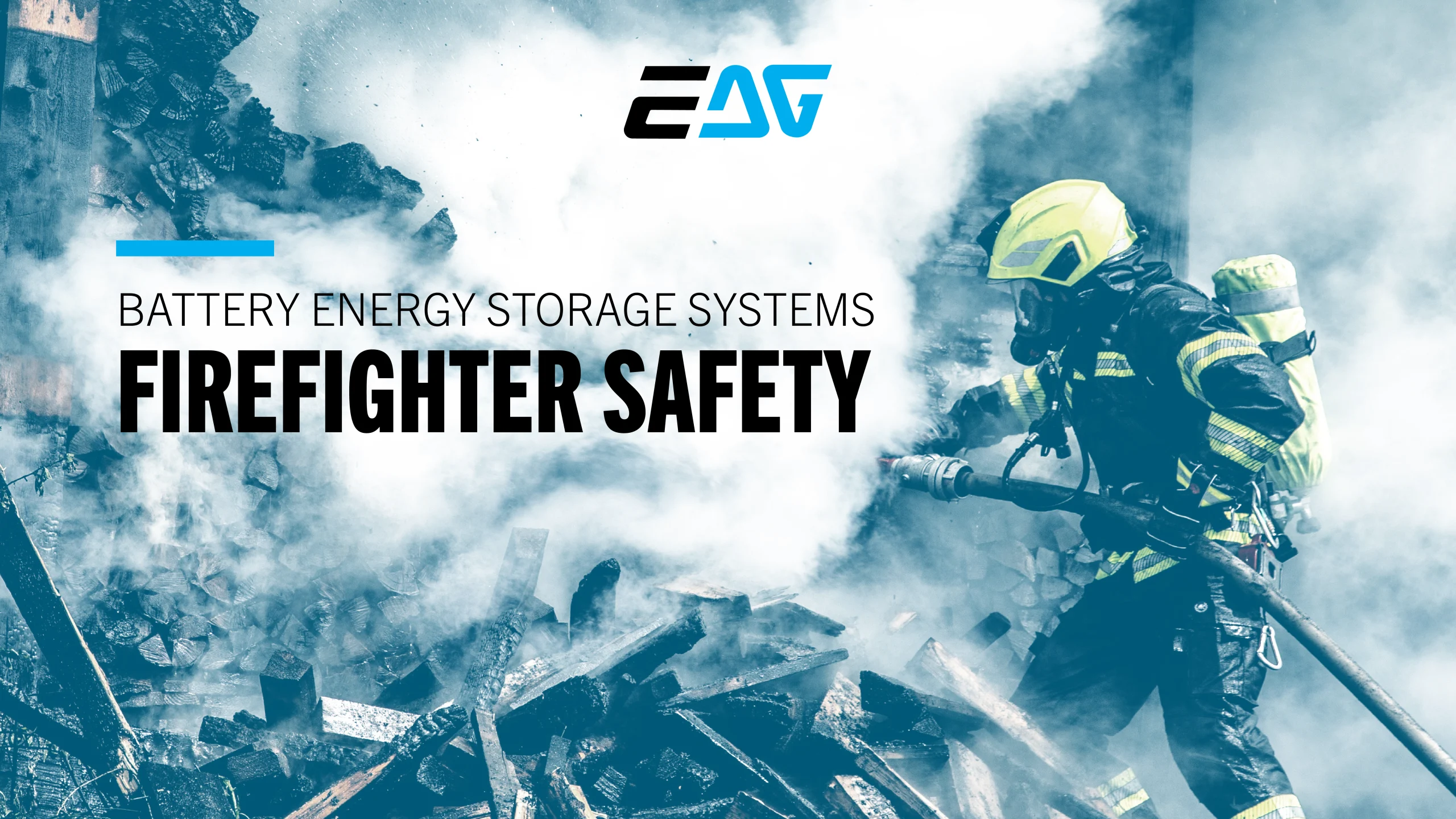
Firefighter wearing full PPE and SCBA operating in heavy smoke during a BESS fire response incident.
Safety

Battery Energy Storage Firefighter Safety: A First Responder Guide

Battery Energy Storage System incidents present unique hazards that require a disciplined, defensive response. Learn how firefighters can prepare for thermal runaway, toxic off-gassing, stranded energy, and re-ignition risks through pre-incident planning, gas monitoring, operator coordination, and no-overhaul response strategies.

Indoor lithium-ion battery storage system installed with EV charging infrastructure and integrated electrical equipment.
Safety

How to Safely Install Indoor Lithium-Ion Battery Energy Storage Systems

Indoor lithium-ion battery systems create unique fire, thermal runaway, and gas management challenges inside occupied structures. This blog explains how modern indoor BESS installations use ventilation design, propagation prevention, thermal management, and immersion cooling architectures to improve deployment safety.

Rainworth lithium-ion battery storage fire site with containerized BESS and visible smoke
Current Event

The Rainworth Lithium-Ion Battery Storage Fire: Local Smoke and Gas Concern

A lithium battery storage fire in Rainworth highlights how BESS failures unfold in real-world conditions. This article breaks down why lithium-ion systems catch fire, why they are difficult to control, and how system design determines whether a failure escalates into a fire event.