Energy Storage Blog

Subscribe to our Newsletter for Article, Industry, and Company Updates

EticaAG BESS container in extreme cold weather conditions at a commercial facility.
Energy Storage

BESS Thermal Management in Hot, Cold, and Extreme Climates

Extreme heat and cold expose the limits of conventional BESS thermal systems. Immersion cooling stabilizes cell temperatures, improves performance in harsh environments, extends battery life, and prevents fire propagation through thermal management and ignition prevention.

BESS revenue stacking concept with calculator and financial documents illustrating battery energy storage system revenue optimization.
Energy Storage

BESS Revenue Stacking: A Complete Guide to Maximizing Battery Storage Returns

BESS revenue stacking generates the most value when multiple revenue streams are combined and optimized together. This guide explains how bill savings, demand response, and market participation work as a coordinated strategy to maximize returns while balancing constraints like capacity, timing, and system design.

Participating in demand response programs with battery energy storage system (BESS) installation
Energy Storage

Participating in Demand Response Programs with Battery Storage

Battery energy storage is reshaping how sites participate in demand response. Instead of curtailing operations, batteries can reduce load and respond to grid events while maintaining normal operations. It covers participation models, value stacking, system requirements, and how to evaluate site fit.

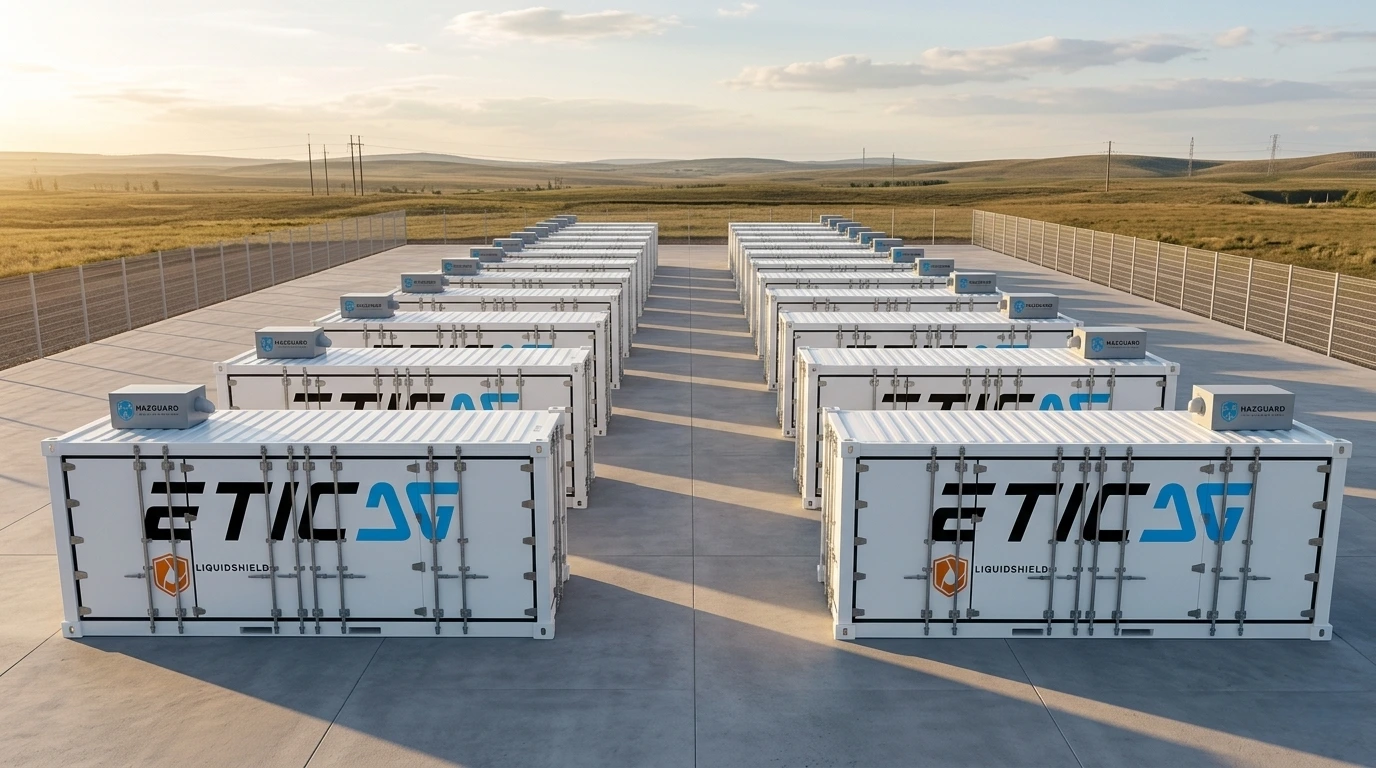
Row of immersion cooled battery energy storage systems that degrade slower than liquid plate
Energy Storage

Immersion Cooling Slows LFP Cell Degradation, Extends Battery Life, and Protects BESS ROI

Thermal management determines how long a BESS lasts, how safely it operates, and whether it meets financial expectations. Uneven heat drives degradation, early augmentation, and performance shortfalls. Immersion cooling eliminates thermal gradients, extends battery life, prevents ignition, and protects ROI by maintaining consistent performance across the system lifecycle.

Stranded Energy in Battery Energy Storage: How Thermal Imbalance Reduces Usable Capacity
Energy Storage

Stranded Energy in Battery Energy Storage: How Thermal Imbalance Reduces Usable Capacity

Stranded energy is usable capacity trapped inside a battery module when one weak cell hits a voltage limit first. Over time, thermal gradients create uneven degradation, widening cell mismatch and reducing deliverable MWh. This article explains how stranded energy forms, why legacy cooling accelerates it, and how immersion cooling maintains thermal uniformity to preserve usable capacity.

The Energy Storage Report 2026. Key trends, challenges, and safety enhancements
Energy Storage

Energy Storage News 2026 Industry Report: Immersion Cooling & Fire Safety

EticaAG is featured in Energy Storage News’ Annual Report 2026, showcasing its integrated fire and gas safety platform. The report highlights how LiquidShield™ immersion cooling delivers consistent thermal control, reduces degradation, and prevents fire propagation, setting a new benchmark for safe, high-performance battery energy storage systems.

Battery Energy Storage End-of-Life Recycling
Energy Storage

Battery Energy Storage End-of-Life Recycling

As battery energy storage systems reach end of life, recycling becomes a critical part of safe and responsible deployment. This guide explains how BESS recycling works in practice, covering LFP batteries, enclosures, ancillary equipment, documentation, and where second-life reuse fits into real-world projects.

Synthetic Ester Dielectric Fluid
Safety

Synthetic Ester Dielectric Fluids for BESS Immersion Cooling  

As battery energy storage systems scale closer to people and infrastructure, safety and longevity are no longer optional. Immersion cooling addresses fire risk, thermal runaway, and degradation at the cell level. Synthetic ester immersion fluids, engineered for high fire-point behavior and long-term stability, enable safer siting and predictable performance across decades of operation worldwide today.

How Liquid Plate Cooling Is Killing Your Battery Life
Energy Storage

How Liquid Plate Cooling Is Degrading Your Battery Life

Liquid plate cooling is widely used in battery energy storage systems, but uneven heat removal creates hot and cold spots that quietly accelerate degradation. This article explores how thermal imbalance shortens battery life, increases safety risk, and why uniform cooling approaches are becoming critical for long-term BESS performance.