

Introduction
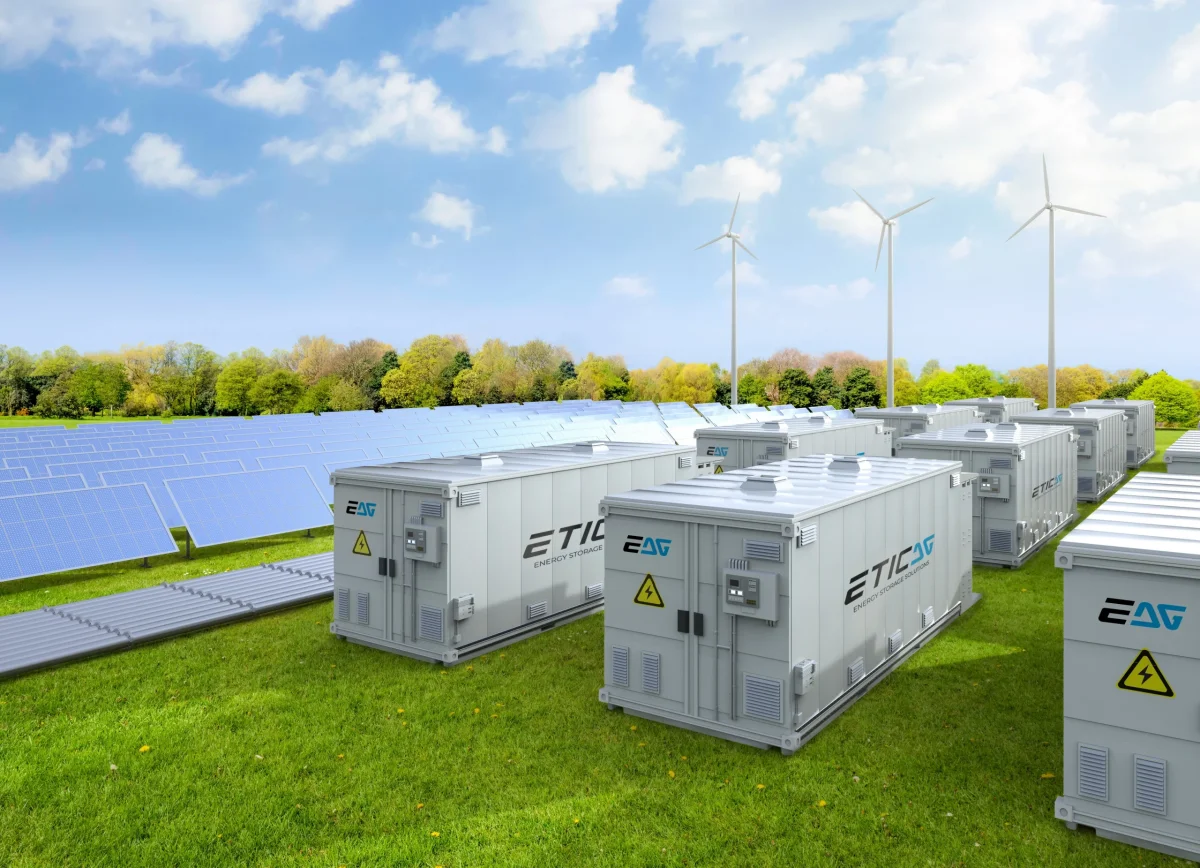
Battery Energy Storage Systems (BESS) are transforming modern energy infrastructure. These systems integrate renewable energy, stabilize grids, and provide backup power. Safety remains a top priority as we adopt these advanced technologies.
BESS applications include residential, commercial, and utility-scale projects, each presenting unique safety challenges. Powering a smart home, enabling peak shaving for businesses, or balancing supply and demand on a national grid all require safe deployment. This ensures long-term success and reliability.
This article examines the standards, certifications, and best practices that guide safe BESS deployment. It also explores how innovative solutions like EticaAG’s Non-Conductive and Non-Toxic Coolant enhance safety in this evolving field.
Why Safety is Critical in BESS
Battery Energy Storage Systems are vital to modern energy infrastructure. However, they introduce various safety challenges that require attention. Mitigating these risks is essential to ensure the reliability, efficiency, and safety of these systems.
Thermal Runaway
Thermal runaway is one of the most serious risks in BESS. This self-sustaining reaction occurs when overheating in one battery cell causes adjacent cells to fail. Fires or explosions may result. Overcharging, manufacturing defects, or physical damage often trigger thermal runaway. Designers must implement robust testing and prevention measures to address this risk.
Fire Hazards
Fire hazards also pose significant threats. Electrical faults, short circuits, or external damage can ignite flammable materials like electrolytes. Fires in BESS are challenging to suppress because of the high energy density and the possibility of re-ignition. Advanced fire prevention technologies play a critical role in minimizing these risks.
Electrical Failures
Electrical failures, such as short circuits or insulation breakdowns, can lead to malfunctions or catastrophic failures. Design flaws, aging components, or poor maintenance are common causes. Regular inspections and sound electrical designs are necessary to prevent these issues.
Mechanical Failures
Mechanical failures from impacts, vibrations, or structural damage can compromise BESS integrity. These failures may expose hazardous materials, cause leaks, or disrupt operations. Protecting systems from mechanical stresses is essential for their long-term performance.
Environmental Factors
Environmental factors like extreme temperatures, humidity, or corrosive conditions can degrade battery components. Cooling systems and protective enclosures help mitigate these effects. Solutions like EticaAG’s coolant ensure systems operate under optimal conditions.
Chemical Hazards
Chemical hazards arise from leaks of toxic or corrosive substances. These leaks pose health and environmental risks. Containment systems, handling protocols, and rapid response plans help minimize their impact.
Cybersecurity Threats
As BESS integrate with digital technologies, cybersecurity threats have also increased. Unauthorized access and operational disruptions from cyberattacks emphasize the need for robust digital safeguards.
We can reduce these risks by following safety standards. We should also use advanced technologies like immersion cooling. Additionally, we need to keep managing risks proactively. These measures ensure safe and reliable BESS operations, building a resilient energy infrastructure for the future.
System-Level Certification
As battery energy storage systems scale across industries, safety and compliance are more important than ever. Key certifications and standards ensure these systems are designed, tested, and installed to minimize risk. The following are the most widely recognized benchmarks for system-level safety.
UL 9540 – Standard for Energy Storage Systems and Equipment
UL 9540 is the comprehensive safety standard for energy storage systems (ESS), focusing on the interaction of system components. It evaluates the overall performance, safety features, and design of BESS, ensuring they operate effectively without compromising safety.
Key areas covered:
- Fire and shock protection
- Compatibility of integrated components (e.g., batteries, inverters, controllers)
- Thermal management systems to prevent overheating
- Fault detection and protection mechanisms
UL 9540 is a cornerstone requirement for deploying energy storage systems in North America, ensuring regulatory compliance and instilling market confidence.
UL 9540A – Test Method for Evaluating Thermal Runaway Fire Propagation in Battery Systems
UL 9540A focuses on one of the most significant hazards in BESS: thermal runaway. A rigorous test method assesses the potential for fire propagation caused by overheating or internal failures.
Testing includes:
- Cell, module, and system-level assessments
- Evaluation of fire containment and suppression measures
- Analyzing toxic gas emissions during thermal events.
UL 9540A does not certify products. Instead, it offers important data for designing safer battery energy storage systems. It also helps with following installation codes like NFPA 855.
NFPA 855 – Standard for the Installation of Stationary Energy Storage Systems
NFPA 855 is the guideline for installing Battery Energy Storage Systems. It ensures that people use these systems safely in homes, businesses, and large utility areas.
Key requirements:
- Location-specific safety: Minimum spacing between systems, setbacks from occupied buildings, and restricted access zones.
- Fire suppression systems: Requirements for sprinklers, clean agents, or other suppression technologies.
- Ventilation: Ensures adequate airflow to prevent the buildup of flammable gases.
- Emergency access: Clear protocols for first responders, including disconnects and emergency shut-offs.
Compliance with NFPA 855 is mandatory in many jurisdictions to reduce risks during operation and maintenance.
IEC 62933 – International Standard for Electrical Energy Storage Systems
IEC 62933 provides a global framework for electrical energy storage systems, offering guidance on design, operation, and safety.
Key features:
- Defines performance metrics for energy efficiency and reliability
- Ensures interoperability between components
- Sets safety benchmarks for electrical, mechanical, and environmental factors
Widely adopted internationally, IEC 62933 ensures BESS compliance in global markets, complementing regional standards like UL 9540.
Battery Cell and Pack-Level Safety Standards
Battery safety starts at the cell and module level, where failures can quickly escalate if not properly managed. These standards focus on testing and validating the integrity of individual cells and battery packs under various stress conditions. They are essential for ensuring the reliability and safety of BESS from the inside out.
UL 1973 – Standard for Batteries for Use in Stationary, Vehicle Auxiliary Power, and Light Electric Rail
UL 1973 evaluates stationary batteries used in energy storage systems. It focuses on the safety and reliability of batteries under normal and abnormal operating conditions.
Key aspects tested:
- Resistance to overcharging, overdischarging, and short circuits
- Durability under mechanical stress (e.g., vibration and shock)
- Fire resistance and flammability of battery materials
- Electrical isolation to prevent arcing or shorts
This standard applies to different types of batteries, like lithium-ion and nickel-metal hydride (NiMH). UL 1973 is an important standard for battery energy storage systems.
UL 1642 – Standard for Lithium Batteries
UL 1642 ensures the safety of individual lithium-ion cells, which are the building blocks of most modern BESS.
Key safety tests:
- Overcharge and overdischarge performance
- Crush and puncture resistance to prevent internal shorts
- Heat exposure and thermal shock resilience
- Internal pressure monitoring for potential cell failure
This standard applies to cells, but it also affects system-level safety. The performance of the whole BESS relies on the integrity of its cells.
IEC 62619 – Safety requirements for secondary lithium cells and batteries for industrial applications
IEC 62619 is the international safety standard that applies to lithium-ion batteries used in industrial systems, including BESS. It outlines testing procedures and construction requirements to minimize the risk of thermal events, electrical failures, and mechanical abuse.
Key areas covered:
- Abuse testing (e.g., overcharge, short-circuit, crush, and thermal stability)
- Cell construction and labeling for traceability and safety
- Fault tolerance and internal protection mechanisms
- Performance under high-load and high-temperature conditions
IEC 62619 is widely adopted outside North America and is often required for global compliance. It plays a key role in ensuring battery-level safety in commercial and utility-scale deployments.
IEC 62133 – Safety Requirements for Portable Lithium Batteries
IEC 62133 provides safety benchmarks for portable lithium batteries, including those used in consumer devices. The standard mainly focuses on smaller applications. However, it is also useful for checking cell-level safety in larger BESS.
Test parameters:
- Electrical safety, such as overvoltage and short circuit protection
- Environmental stressors, including temperature, humidity, and vibration
- Toxicity and fire risks associated with battery materials
Explosion and Fire Safety Standards
Fire and explosion risks are among the most critical safety concerns in battery energy storage systems, especially where thermal runaway and gas release are possible. These standards address both preventive measures and protective design strategies to reduce the likelihood and impact of fires or deflagrations. Together, they help safeguard people, property, and system infrastructure.
NFPA 68 – Standard on Explosion Protection by Deflagration Venting
NFPA 68 is important for managing explosion risks in BESS. This is especially true for systems in enclosed or poorly ventilated spaces.
Applications:
- Protecting systems from pressure buildup caused by thermal runaway or gas generation
- Designing venting systems to release pressure safely
- Preventing structural damage and protecting personnel in proximity to the system
This standard is often combined with NFPA 69 for a comprehensive explosion protection strategy.
NFPA 69 – Standard on Explosion Prevention Systems
NFPA 69 complements NFPA 68 by focusing on preventive measures for explosion hazards in BESS.
Core elements:
- Systems for detecting flammable gas concentrations
- Active suppression mechanisms to neutralize ignition sources
- Inerting techniques, such as replacing oxygen with inert gases, to prevent combustion
This standard is particularly critical for systems that generate or store hydrogen, a flammable byproduct of some battery chemistries.
NFPA 1 – Fire Code
NFPA 1 combines fire prevention and protection standards into a single, comprehensive code. It addresses fire risks associated with modern energy systems, including renewable energy and ESS.
Key features include:
- Guidelines for the safe installation of ESS
- Requirements for fire suppression and containment measures
- Emergency planning and access for first responders
- Provisions for fire risk assessments in different environments
NFPA 1 is vital for reducing fire-related risks and ensuring compliance with safety protocols.
NFPA 70 – National Electrical Code (NEC)
NFPA 70 provides a comprehensive framework for safe electrical design, installation, and maintenance. It includes detailed requirements for renewable energy systems and ESS.
Key features include:
- Standards for wiring and equipment in energy systems
- Guidelines for integrating photovoltaic (PV) and ESS components
- Requirements for overcurrent protection and grounding systems
- Provisions for mitigating electrical fire and shock risks
The NEC is the cornerstone of electrical safety, promoting reliability and compliance in energy systems.
International Fire Code (IFC)
The International Fire Code (IFC) establishes regulations to protect life and property from fire and explosion hazards. It provides comprehensive guidelines for the safe use of energy systems in residential, commercial, and industrial settings.
Key features include:
- Requirements for fire safety in energy storage systems (ESS)
- Specifications for system placement to reduce fire risks
- Guidance on emergency response protocols for ESS
- Standards for ventilation and fire suppression systems
The IFC is crucial for ensuring safe deployment and operation of energy systems while mitigating fire hazards.
NFPA 585 – Recommended Practice for Fire and Explosion Prevention in Photovoltaic Energy Systems
NFPA 585 focuses on fire prevention in photovoltaic (PV) systems. It also provides valuable guidance for BESS when integrated with solar energy systems.
Key recommendations:
- Ensuring adequate spacing between PV arrays and BESS
- Including fire barriers to prevent flame spread
- Ventilation and cooling to reduce thermal hazards
This standard is particularly useful for hybrid systems where BESS are colocated with solar installations.
Interconnection and Control Standards
As BESS become integral to modern power grids, it’s essential that they communicate effectively and operate safely with other distributed energy resources (DERs). These standards govern how BESS systems connect to the grid, maintain stability, and provide advanced control functions. They form the backbone of interoperability, reliability, and grid resilience in a decentralized energy landscape.
IEEE 1547 – Standard for Interconnecting Distributed Energy Resources with Electric Power Systems
IEEE 1547 establishes technical guidelines for integrating DERs into the electric power grid. It ensures that DERs, such as solar panels and battery energy storage systems, operate reliably and safely when connected to the grid.
Key features include:
- Voltage regulation and grid stability support
- Communication requirements for monitoring and control
- Standards for power quality to avoid grid disturbances
- Safety considerations for both the grid and connected systems
This standard is critical for the seamless adoption of renewable energy and distributed resources while maintaining grid reliability.
IEEE 2800 – Standard for Interconnection and Interoperability of Inverter-Based Resources
IEEE 2800 defines technical specifications for the interconnection and interoperability of inverter-based resources, such as wind and solar, with the electric grid.
Key features include:
- Voltage and frequency control requirements
- Standards for grid stability and reliability
- Communication protocols for real-time monitoring and control
- Integration of advanced grid-support functionalities
This standard is critical for the seamless adoption of inverter-based renewable energy resources.
UL 1741 – Inverters, Converters, Controllers for Use with DER
UL 1741 is the core safety standard for power electronics used alongside Distributed Energy Resources (DER), including BESS. It evaluates how inverters, converters, and charge controllers function in grid-tied and standalone configurations, ensuring they operate safely and reliably.
Key areas covered:
- Grid support functionality and anti-islanding protection
- Interoperability with grid codes such as IEEE 1547
- Temperature stress, fault conditions, and overload protection
- Harmonic distortion and electrical interference limits
UL 1741 is critical for any energy storage system that interfaces with the utility grid. It ensures safe DER operation and is often required for interconnection approval in North America.
CSA TS-800 – Technical Safety Requirements for BESS (Canada)
CSA TS-800 sets the national safety framework for installing and operating Battery Energy Storage Systems in Canada. Tailored to Canadian codes and environmental conditions, it provides a comprehensive set of technical guidelines for system design, component safety, and fire risk mitigation.
Key areas covered:
- Thermal runaway prevention and containment strategies
- Electrical isolation, system shutdown, and ground fault protection
- Installation considerations for cold climates and indoor vs. outdoor use
- Emergency response access, system labeling, and documentation
CSA TS-800 complements North American standards like UL 9540 and NFPA 855 but is specifically designed to meet Canadian safety and permitting requirements.
Component-Level and Control Standards
Battery energy storage systems often rely on embedded controls and automated safety functions to manage performance and prevent failures. These standards ensure that individual components such as sensors, actuators, and controllers work together safely and reliably. They are especially important for systems with advanced monitoring, diagnostics, and real time response capabilities.
UL 60730-1 – Automatic Electrical Controls for Household and Similar Use
UL 60730-1 focuses on the control systems within energy storage systems, ensuring they operate reliably under various conditions.
Key features:
- Tests for fail-safes in automatic controls
- Verification of sensors, actuators, and safety interlocks
- Functional safety analysis to ensure reliable system responses
Although not exclusive to BESS, it plays a critical role in ensuring automated monitoring and response mechanisms function correctly.
Immersion Cooling Technology: The Future of BESS Safety
Overview of Immersion Cooling Technology
Immersion cooling submerges battery cells in a non-conductive, non-toxic coolant. This method ensures uniform heat dissipation and prevents hotspots. Unlike traditional air or liquid cooling, it eliminates the need for surface contact or air circulation.
EticaAG’s Non-Conductive and Non-Toxic Coolant demonstrates this technology’s potential. It absorbs and dissipates heat efficiently, reducing thermal stress on components. Immersion cooling enhances battery performance and addresses critical safety concerns.
Key Safety Benefits
Immersion cooling in Battery Energy Storage Systems provides key safety benefits:
- Enhanced Thermal Management: Immersion cooling works by submerging battery cells in a coolant, which efficiently removes heat. This keeps the temperature even and prevents overheating. It also reduces the risk of thermal runaway events that can cause fires or explosions.
- Reduction of Fire Propagation Risks: If a thermal incident occurs, the coolant acts as a barrier to stop the fire from spreading between cells. This ability to contain fires is crucial for reducing the impact of potential failures in the battery system.
- Improved Energy Efficiency: Keeping batteries at the best operating temperature helps them perform efficiently and last longer. Consistent cooling also minimizes energy losses caused by temperature-related inefficiencies.
- Protection Against Electrical Hazards: The coolant is non-conductive. This prevents electrical arcing and short circuits even during system faults. This added protection increases the safety and reliability of the energy storage system.
By using immersion cooling technology, such as EticaAG’s Non-Conductive and Non-Toxic Coolant, BESS can achieve higher safety standards, better performance, and greater protection against thermal and electrical risks. This innovation is a major improvement for safer and more efficient energy storage solutions.
Conclusion
Battery Energy Storage Systems are essential for the future of energy, but safety must always come first. Each of the safety standards relevant to BESS plays a unique role in ensuring the systems’ safety, reliability, and performance. Adhering to them not only minimizes risks but also builds trust among stakeholders, from regulators to manufacturers to end users.
Following these standards, along with obtaining proper certifications, ensures safe use and reinforces confidence across the energy ecosystem.
Immersion cooling technologies such as EticaAG’s Non-Conductive and Non-Toxic Coolant are the next step in BESS safety. These technologies reduce fire risks, improve efficiency, and increase the lifespan of systems. They help create a safer and more dependable energy future.
By following safety standards and embracing innovations, we can build a sustainable and secure energy future. Let us take the lead.


